Chapter 1
IN THIS LESSON
Whatever it is, the way you tell your story online can make all the difference.
It all begins with an idea. Maybe you want to launch a business. Maybe you want to turn a hobby into something more. Or maybe you have a creative project to share with the world..

DNT Care · Health & Wellness Coach Certification
Lesson 1.1: Introduction to Professional Health & Wellness Coaching
Module 1: Foundations of Health & Wellness Coaching. What the profession is, where it came from, how it differs from other kinds of help, and why the way a coach talks matters as much as what a coach knows.
Lesson 1.1 · Introduction to Professional Health & Wellness CoachingPage 1
What You'll Learn
1
What a health coach really does
Explain in plain words what a health and wellness coach does, and how the job came to be.
2
How coaching is different from other helpers
Tell coaching apart from a doctor's care, therapy, diet care, and personal training, and know when to send someone to another professional.
3
Helping without taking over
Hold a short conversation where the client, not you, decides what to change and how.
Quick Skim
Marcus left his doctor's office with a printout that said "lose weight, move more." He already knew that. What he didn't know was how to make it fit a life of night shifts and two busy teenagers. His health coach didn't give him another printout. She asked what mattered most to him, then listened long enough for him to find his own first step.
Three Key Terms
Tap or click each card to see what it means.
How to Use This Lesson
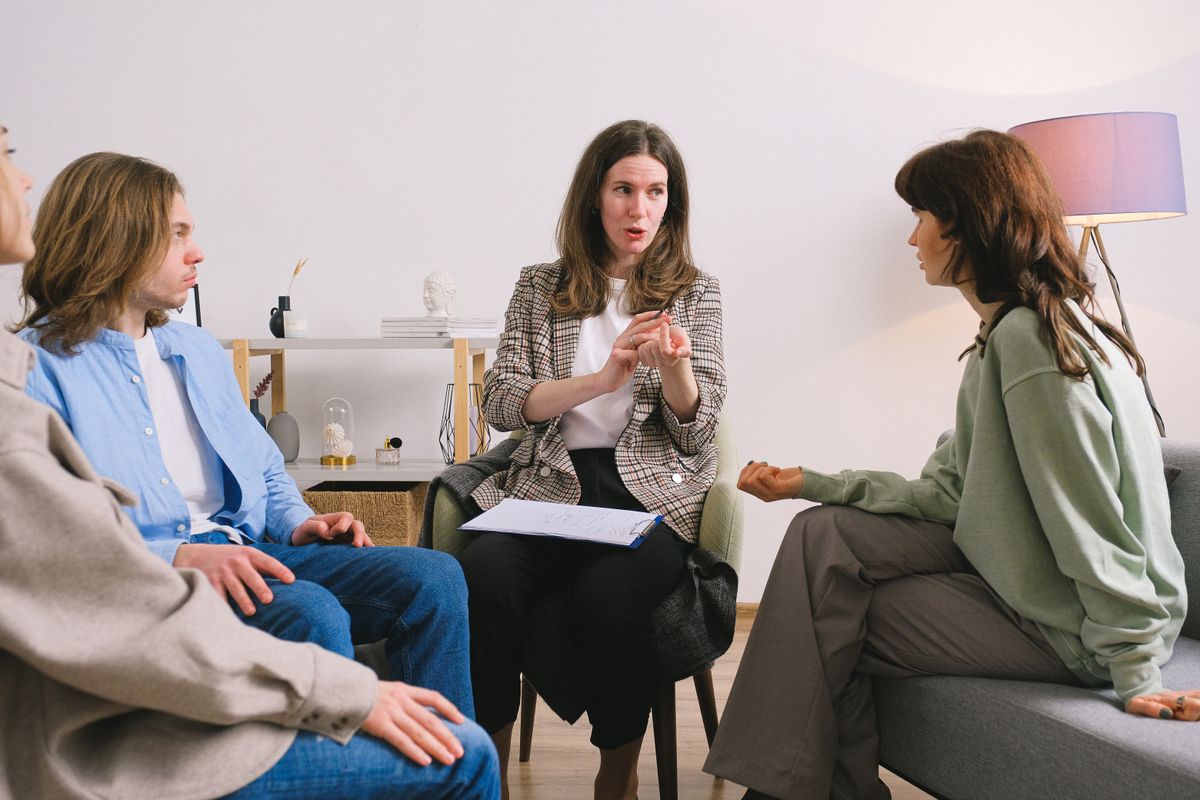
- Read one page at a time. Each page has two photos, one short video, and a "Stop and Think" question. Your answers save in this browser and collect in My Notebook on the last page.
- Five practice activities are spread through the lesson. They're the heart of it: you'll talk with simulated clients, sort real requests, and coach someone through four weeks of change. Complete three to earn the Client-First Coach badge.
- Words with a dotted gold underline open a short definition when you tap them.
- The lesson ends with a 10-question test and a record of your practice scores.
1.1.1 Knowing Isn't the Hard Part
Most people already know what they "should" do for their health. They've heard it from doctors, read it online, and seen it on cereal boxes. Eat more vegetables. Move every day. Sleep seven or more hours. Cut back on alcohol. Don't smoke. The advice is not a secret.
And yet most of us don't do all of it. That gap between knowing and doing is where health and wellness coaching lives. A coach's job isn't to repeat the advice louder. It's to help a person close the gap in a way that fits their actual life: their job, their money, their family, their culture, their energy on a Tuesday night.

Let's go back to Marcus. He's 52, works nights at a distribution center, and has been told his blood sugar is in the range his doctor calls prediabetes. His doctor gave him good, accurate advice in a 15-minute visit. Then Marcus went home to a schedule where "dinner" happens at 2 a.m. from a vending machine, and where the gym closes before he wakes up.
Marcus doesn't need more information. He needs someone to help him think through his own situation. What would he actually be willing to try? What's worked for him before? What gets in the way? What would make the effort worth it to him, not just to his doctor? Those are coaching questions, and you'll learn to ask them in this course.
Watch: A U.S. Army veteran talks about working with a health coach through the VA, and a coach describes her side of the partnership. As you watch, listen for who is setting the goals.
What this course will ask of you
This certification is built around practice, not just reading. Knowing the definition of coaching won't help a client. Being able to hold a calm, curious, useful conversation will. So in every lesson you'll do more than read: you'll make choices in realistic client conversations, see what happens next, and get feedback. Some scenarios are tidy. Many are not, because real clients rarely are.
In this first lesson you'll build a clear picture of the profession: where it came from, what it is today, what a coach does and doesn't do, and why the coach's way of talking matters as much as what the coach knows.

A word on the client's life
Throughout the course you'll hear the phrase "the client is the expert on their own life." It doesn't mean the client knows more about blood sugar than you do. It means the client knows things you can't: what their mornings look like, what they've tried, what they fear, what they love, and what they will truly do. A good coach treats that knowledge as the most valuable information in the room.
You'll also hear about again and again. Health coaches work alongside doctors, nurses, dietitians, therapists, and trainers. We don't diagnose, prescribe, or treat. Knowing where your role ends is one of the first marks of a professional, and it protects your clients.
Stop and Think
Think of a health habit you know you "should" change but haven't. What has actually gotten in the way: information, or something else?
Lesson 1.1 · Section 1.1.2Page 2
1.1.2 Where Health Coaching Came From
Health coaching didn't appear out of nowhere. It grew from a slow realization in health care: telling people what to do, however clearly, often doesn't change what they do.
The "tell and hope" era
For most of the twentieth century, the model for health behavior was simple. An expert explained the problem, gave instructions, and expected the patient to follow them. If the patient didn't, they were called "non-compliant," as if the failure were theirs alone.
The results were sobering. In 2003 the World Health Organization reported that, in wealthy countries, people living with long-term conditions followed their treatment plans only about half the time on average. Clear instructions weren't enough. People needed help with the human side of change: motivation, confidence, habits, and the messy details of daily life.

Four ideas that built the field
Several lines of research, mostly from psychology, came together to shape modern health coaching. You'll study each in depth in Module 2. For now, meet them briefly.
- Confidence matters. In 1977, psychologist Albert Bandura described : a person's belief that they can do a specific thing. People who believe they can succeed at a task are more likely to try it and keep going.
- Change happens in stages. Around the same time, researchers James Prochaska and Carlo DiClemente studied how people quit smoking. They noticed people move through stages, from not thinking about change, to thinking about it, to preparing, acting, and keeping it up. Helpers do better when they meet people where they are.
- How you talk changes what people do. In 1983, psychologist William Miller described , later developed with Stephen Rollnick in a 1991 book. It's a way of talking that draws out a person's own reasons for change instead of arguing for it.
- Build on what's strong. In the late 1990s, positive psychology turned attention from what's wrong with people to what helps them thrive: strengths, meaning, hope, and good relationships.
Coaching borrowed from all four. It also borrowed from sports and business coaching the simple structure of a regular, goal-focused conversation with someone in your corner.
Figure 1.1 A simplified timeline. Each idea built on the ones before it.
From phone calls to a profession
In the 1990s and 2000s, health insurers and employers began hiring nurses and health educators to call members with chronic conditions and help them manage daily self-care. Many of these programs used the word "coach." At first, "coaching" often meant reminders and education by phone. Over time, the better programs moved toward the partnership approach you'll learn here.
The field grew fast, and so did confusion about what "health coach" meant. In 2013, a team led by Ruth Wolever published a large review of research that used the term. They found the word was being used for many different things, and proposed a shared definition: a client-centered process in which clients at least partly set their own goals, learn through self-discovery as well as information, and track their own behavior to stay accountable, all inside a supportive relationship with a trained coach.
Watch: A short video from the U.S. Department of Veterans Affairs about its Whole Health approach. Notice the shift in the opening question, from "What's the matter with you?" to "What matters to you?" That shift is the heart of coaching.
Standards, codes, and recognition
In the late 2010s, national training standards and a board certification exam for health and wellness coaches appeared in the United States. Then, in 2019, the American Medical Association approved three temporary tracking codes for "health and well-being coaching," which took effect on January 1, 2020. The codes cover a first coaching session, follow-up sessions, and group coaching. Tracking codes let health systems count how often coaching is used, which is a step toward wider payment. They don't guarantee that insurers will pay for coaching; most don't yet.
Around the same time, large health systems such as the VA built coaching into everyday care. The phrase "what matters to you" moved from a slogan into a way of running appointments.

Case
Same advice, different conversation
In 1995, Rosa's nurse told her to "watch her salt" and handed her a pamphlet. Rosa nodded, threw the pamphlet away, and kept cooking the way her mother had. In 2024, Rosa's grandson has the same diagnosis. His coach asks what he cooks, who he eats with, and what he'd be willing to adjust first. He picks one family recipe to try with less salt and more herbs, and reports back the next week. The medical advice is the same. The conversation is completely different.
Remember this history when you feel the urge to lecture a client. The field exists because lecturing didn't work well enough. You're part of the answer to that problem.
Stop and Think
Have you ever been "told" to change something and pushed back, even though you agreed? What made you push back?
Lesson 1.1 · Section 1.1.3Page 3
1.1.3 The Landscape Today
Why is health coaching growing now? Three forces meet: more people living with long-term health conditions, too little time in medical appointments to talk about daily life, and new tools that make regular support easier to deliver.
Force one: chronic disease is common
A is a condition that lasts a year or more and needs ongoing care or limits daily life. Heart disease, type 2 diabetes, high blood pressure, chronic lung disease, and many cancers fall into this group.
Research Established
Most U.S. adults live with at least one chronic disease
The U.S. Centers for Disease Control and Prevention (CDC) reports that about 6 in 10 U.S. adults have at least one chronic disease, and about 4 in 10 have two or more. The CDC names a short list of behaviors behind many of these conditions: tobacco use, poor nutrition, physical inactivity, and excessive alcohol use.
What it means for coaches: many of your clients will already be managing a condition with their medical team. Your role is to support the daily habits around that care, not to replace it.
Source: CDC, National Center for Chronic Disease Prevention and Health Promotion, "Chronic Diseases in America."

Notice what that list of risk behaviors has in common. None of them can be fixed with a prescription alone. They're daily choices, shaped by routines, money, stress, culture, neighborhoods, and family. That's exactly the territory coaching works in.
Force two: appointments are short
A primary care visit often lasts only a few minutes of real conversation. In that time, a clinician has to review symptoms, check results, adjust medicines, and handle new concerns. There's rarely time to ask, "What would make it easier for you to walk after dinner?" and then to follow up two weeks later.
Coaches fill that gap. A coaching session typically lasts 30 to 60 minutes and happens regularly over weeks or months. That time and rhythm allow the slow, steady work behavior change needs.
Watch: Dr. Thomas Bodenheimer, a primary care physician and researcher, explains why coaching patients to manage their own care matters. As you watch, think about which parts of what he describes a non-clinical coach could take on.
Force three: support has gone digital
Since 2020, video sessions have become normal for many kinds of care, and coaching moved online easily. A coach in Georgia can work with a client in Ohio, or in another country, as long as they follow the rules that apply where they practice. Phone calls, secure messaging, wearable step counters, and habit-tracking apps give clients ways to stay connected between sessions.
Artificial intelligence (AI) tools are now part of this picture too. Some apps send automated nudges, and some chatbots answer health questions. These tools can help with reminders and organization. They can't build trust, notice what a client isn't saying, or take professional responsibility for safety. You'll learn the rules for using technology and AI responsibly in Lessons 1.3 and 6.4. For now, keep this principle in mind: technology can extend your reach, but the relationship is still the work.

Who pays for coaching?
Payment is one of the least settled parts of the profession, so be careful with anyone who promises you otherwise. Today, coaching is paid for in several ways:
- Clients pay directly in private practice.
- Employers pay as part of workplace wellness or benefits programs.
- Health plans and insurers offer coaching to members, often for specific conditions.
- Health systems and clinics employ coaches as part of the care team.
- Public and community programs fund coaches for prevention, such as lifestyle programs for people at risk of type 2 diabetes.
As you read on the last page, tracking codes for coaching took effect in 2020, but most insurers still don't routinely pay for coaching by itself. Policies change, so check current rules in your country and state before you build a business around insurance payment.
In practice
What this means for your first year
Expect variety. You might coach employees by video in the morning, lead a group class at a community center at lunch, and see a private client in the evening. Coaches who do well learn to adapt the same core skills to very different settings, which is why this course spends so much time on practice.
Stop and Think
Which of the three forces (chronic disease, short appointments, digital tools) do you see most clearly in your own community? Give one example.
Lesson 1.1 · Section 1.1.4Page 4
1.1.4 What a Health Coach Actually Does
If someone at a party asks, "So what does a health coach do?", you should be able to answer in one breath. Here's one way: "I help people make the health changes they want to make, in a way that fits their life, and I stick with them while they do it."
The purpose of the role
The purpose of is to help people build the motivation, confidence, skills, and plans to change their own health behaviors, and to keep those changes going. The client chooses the goals. The coach brings a structured process, communication skills, and knowledge of how behavior change works.
That last part matters. A coach is not just a friendly listener. Coaches know the science of habits, motivation, and goal setting. They know enough about nutrition, movement, sleep, and stress to have informed conversations and to spot when something needs a medical professional. They use that knowledge to guide the process, not to take over the client's decisions.

Seven core responsibilities
Different employers describe the job in different words, but most professional coaching work comes down to these seven responsibilities.
| Responsibility | What it looks like in a session |
|---|---|
| 1. Build a trusting relationship | Listening without judgment, keeping confidences, being reliable and on time, and treating the client as a capable adult. |
| 2. Explain the work clearly | Saying what coaching is and isn't, how sessions work, what it costs, and what the limits of confidentiality are. This becomes your coaching agreement (Lesson 1.5). |
| 3. Help the client find their own reasons | Asking what matters to them, what they want their health to make possible, and why change matters now. |
| 4. Partner on goals and plans | Helping the client turn a wish into a small, specific next step they believe they can do, then reviewing how it went. |
| 5. Support follow-through | Checking in, celebrating progress, treating slip-ups as information instead of failure, and adjusting the plan. |
| 6. Share information with permission | Offering reliable general health information when it helps, after asking, in plain language, and without prescribing. |
| 7. Protect safety and refer | Noticing warning signs, staying within scope, and connecting clients with doctors, therapists, dietitians, and other professionals when needed. |
Figure 1.2 The seven core responsibilities of a professional health and wellness coach.
Watch: Health coaches at a large health insurer describe how they see their role. Listen for words like "partner" and "support," and notice that this is one employer's version of the job; you'll meet others on page 11.
Health coach or wellness coach?
You'll see both titles, often together. In everyday use, "health coach" often suggests work connected to a medical condition or health risk, such as supporting someone with high blood pressure. "Wellness coach" often suggests a broader focus on overall wellbeing: energy, stress, sleep, relationships, purpose. In practice the skills are the same, and most professionals, including graduates of this program, use the combined title health and wellness coach.
What the coach brings, and what the client brings
Think of a coaching session as a meeting of two kinds of expertise.
The coach brings
- A safe, structured conversation
- Listening and questioning skills
- Knowledge of how habits and motivation work
- General health knowledge and good sources
- Tools for goals, tracking, and review
- Judgment about safety and referral
The client brings
- Their goals and values
- Knowledge of their own life and history
- What has and hasn't worked before
- Their culture, family, and community
- Their real constraints of time and money
- The final decision on every change

What a coach does not do
Professional coaches do not diagnose conditions, prescribe or adjust medicines or supplements, create individualized medical diets, design treatment for injuries, or provide psychotherapy. You'll explore exactly where these lines fall on the next two pages. For now, remember a simple test: if it needs a license to do, it isn't coaching.
Case
One week in Lena's coaching
Lena, 38, wants more energy. In session one, her coach asks what "more energy" would let her do. Lena says, "Play with my kids after work instead of collapsing." Together they notice she skips lunch most days. Lena decides to try packing a simple lunch three days this week. Her coach asks how confident she feels, on a scale of 0 to 10. "Maybe a 6." "What would make it a 7?" "Making it the night before." That's the plan. The coach didn't design a menu. Lena did.
Stop and Think
Write your own one-breath answer to "What does a health coach do?" in words a neighbor would understand.
Lesson 1.1 · Section 1.1.5Page 5
1.1.5 Coaching, Life Coaching, and Counseling
From the outside, a health coaching session, a life coaching session, and a counseling session can look alike: two people talking, one listening closely and asking questions. Underneath, they have different purposes, training, and legal limits.
Health coaching and life coaching
Life coaching and health coaching are close cousins. Both are partnerships focused on the client's goals, both rely on listening and powerful questions, and neither diagnoses or treats illness. The difference is mostly focus and knowledge.
- Life coaching covers any area of life: careers, relationships, purpose, confidence, big transitions. A life coach doesn't need specific health knowledge.
- Health and wellness coaching focuses on health behaviors and wellbeing: eating, movement, sleep, stress, substance use, and living well with a condition. A health coach needs solid general health knowledge, understands how the medical system works, and coordinates with clinical professionals.
The two often overlap. A client working on sleep may soon start talking about a stressful job. That's fine: wellbeing is connected. A skilled health coach follows the client's agenda while staying honest about what they're trained to help with.

Coaching and counseling or therapy
This is the boundary that matters most for client safety. Licensed mental health professionals, such as psychologists, licensed counselors, clinical social workers, and marriage and family therapists, are trained and legally permitted to assess and treat mental health conditions. Coaches are not.
| Health & wellness coaching | Counseling or psychotherapy | |
|---|---|---|
| Main focus | Present and future: goals, habits, next steps | Can include past experiences, trauma, and patterns |
| Who it's for | People who are functioning day to day and want to make changes | People with distress or a mental health condition that affects daily life |
| Diagnosis | Never | Yes, by licensed professionals |
| Treatment | No. Coaching is not treatment | Yes, using therapies the clinician is licensed to provide |
| Regulation | Usually no license required in the U.S. | State license required |
Emotions come up in coaching all the time, and that's normal. A client may feel frustrated, discouraged, or anxious about a health change. Coaches can acknowledge and respond to those feelings with empathy. What coaches don't do is try to treat depression, anxiety, trauma, eating disorders, or addiction. When those appear, the coach's job becomes making a caring, clear referral.
Watch: A demonstration of motivational interviewing with a client living with depression. As you watch, sort what you see into two piles: listening skills any coach uses, and work that belongs with a licensed mental health professional.
Safety first
Signs it's time to refer
Refer a client to their doctor or a licensed mental health professional, and say so kindly and directly, if you notice signs like these: sadness or hopelessness most days for two weeks or more; loss of interest in nearly everything; big changes in sleep or appetite that worry the client; panic or anxiety that stops them doing daily tasks; signs of disordered eating or substance misuse; or a recent trauma they keep returning to.
If a client talks about wanting to die or harm themselves or someone else, safety comes first. Stay with them, take it seriously, and connect them with immediate help. In the U.S., that means calling or texting 988 (the Suicide & Crisis Lifeline) or calling 911 in an emergency. Elsewhere, use the local emergency number. You'll practice crisis responses in Lesson 5.3.
A referral isn't the end of the coaching relationship unless it needs to be. Many clients work with a therapist and a coach at the same time, with the client's permission and with each professional staying in their own lane.

Stop and Think
Write the exact words you would use to suggest a therapist to a client, in a way that sounds caring rather than like you're passing them off.
Lesson 1.1 · Section 1.1.6Page 6
1.1.6 Coaching Alongside Doctors, Dietitians, and Trainers
Health coaches share territory with three other kinds of professionals: medical clinicians, nutrition professionals, and fitness professionals. Each has a different job. Knowing those jobs makes you a better teammate and keeps clients safe.
Coaching and medical care
Doctors, nurse practitioners, physician assistants, and nurses diagnose, order tests, prescribe medicines, and decide on treatment. A coach never does any of these, even when the client asks, even when the coach "knows the answer," and even when the client is a friend.
What coaches can do is support the medical plan. If a client's doctor has recommended more walking, the coach helps the client figure out when, where, and how. If a client is confused about their medicine, the coach helps them write down questions to ask their pharmacist or doctor. If a client mentions chest pain, sudden weakness, or another warning sign, the coach urges them to get medical care right away.

Coaching and nutrition therapy
Food is part of almost every health coaching conversation, so this boundary deserves care. A registered dietitian (RD or RDN) has a degree in nutrition, supervised practice, and a national exam. Dietitians provide medical nutrition therapy: individualized eating plans to treat or manage a disease, such as kidney disease, diabetes, or food allergies. In many U.S. states, giving that kind of individualized nutrition care is legally limited to licensed professionals. Rules differ by state and country, so always check where you practice.
Coaches can talk about general, widely accepted healthy eating guidance, help clients explore their eating habits, and support changes the client chooses, like adding vegetables to lunch or cooking at home more often. Coaches don't write meal plans for medical conditions, set calorie or nutrient prescriptions, or recommend supplements to treat a condition.
Watch: A hospital dietitian explains the difference between a registered dietitian and a "nutritionist." Pay attention to how training and credentials shape what each one is allowed to do.
Coaching and personal training
Certified personal trainers design exercise programs, teach correct form, and supervise workouts. Physical therapists treat injuries and movement problems. A coach can help a client decide they want to be more active, explore what kind of movement they'd enjoy, and build the habit of showing up. A coach doesn't design a training program, correct exercise technique, or create a rehab plan for an injury.
Many professionals hold more than one credential. A nurse who is also trained as a coach, or a trainer with coaching skills, may do both jobs. When you hold more than one role, be clear with the client about which hat you're wearing and stay within the training behind each one.

Featured Animation: One Person, Many Helpers
The client sits at the center of a team. Tap any helper, or let the animation walk you around the circle.
Tap a helper
Each professional around the client has a different job. Watch what each one does, and how the coach works alongside them.
The simple scope test
When you're unsure, ask yourself three questions:
- Would doing this require a license I don't hold?
- Am I being asked to diagnose, prescribe, treat, or design a medical plan?
- Could my answer harm this client if I'm wrong?
If the answer to any of these is yes, the move is to support and refer, not to answer. Now try it with real client requests.
Stop and Think
Which boundary on this page do you think you'd be most tempted to cross, and why?
Lesson 1.1 · Section 1.1.7Page 7
1.1.7 Coaching Is Not Advice-Giving
Most people who become health coaches are natural helpers. They see a problem and want to fix it. That instinct is a gift, and also the biggest trap new coaches fall into.
Four ways to help
There are four common ways one person helps another with a health change. Each is useful somewhere. Only one of them is coaching.
| Approach | Who has the answers? | Sounds like |
|---|---|---|
| Advice-giving | The helper | "You should try walking at lunch." |
| Teaching | The helper shares knowledge | "Here's how fiber affects blood sugar." |
| Consulting | The helper diagnoses the situation and designs the solution | "Based on your schedule, here's the plan I've built for you." |
| Coaching | The client, with the coach's help | "What do you think might work for you, given your schedule?" |
Figure 1.3 Four ways of helping. Coaching is the only one where the client produces the plan.
Teaching has a place in coaching. Clients sometimes need facts, and you'll learn to offer them well. Consulting and advice-giving, though, put the helper in charge. When that happens, the client's own thinking switches off, and so does much of their commitment.

The righting reflex
The creators of motivational interviewing gave a name to the helper's urge to fix: the . It's the automatic, well-meant impulse to spot a problem and solve it for someone else. "You should..." "Have you tried...?" "Why don't you just...?"
The trouble is what happens on the other side. When a person feels unsure about a change, which is called , hearing one side argued at them tends to make them argue the other side. You say, "Walking would help your blood sugar." They say, "Yes, but I don't have time." You push harder; they defend harder. Without meaning to, you've made them talk themselves out of change.
Research Established
When people feel pushed, they often push back
Psychologist Jack Brehm described "psychological reactance" in 1966: when people feel their freedom to choose is threatened, they tend to resist and may even do the opposite of what they're told. Many studies since then have found this pattern in health messages. Messages that sound controlling ("you must") tend to cause more resistance than messages that respect choice.
What it means for coaches: protecting the client's sense of choice isn't just polite. It makes change more likely.
Sources: Brehm, J. W. (1966). A Theory of Psychological Reactance. Miller, W. R., & Rollnick, S., Motivational Interviewing (1991 and later editions).
Watch: A training video showing a well-meaning doctor who lectures and warns. Count how many times the doctor tells instead of asks, and watch what happens to the patient's body language. You'll see a different approach on the next page.
Client-centered doesn't mean passive
New coaches sometimes swing too far the other way. They stop sharing anything, nod endlessly, and let sessions drift. That isn't client-centered coaching either. A professional coach is active: they guide the structure of the session, ask sharp questions, reflect what they hear, notice patterns, and help the client land on a clear next step. They just don't take over the content: what the client wants, why, and how they'll get there.
Sharing information the coaching way
When information would truly help, coaches use , a simple three-step pattern you'll practice throughout the course:
- Ask what the client already knows or wants to know. "What have you heard about how sleep affects appetite?"
- Offer a small piece of information, with permission. "Would it be useful if I shared what the research generally says?"
- Ask what they make of it. "How does that fit with what you've noticed?"
This keeps the client in charge of what they do with the information. It also lets you check that what you shared made sense to them.

Stop and Think
When do you notice your own righting reflex most: with family, friends, coworkers? What might you do instead next time?
Lesson 1.1 · Section 1.1.8Page 8
1.1.8 Inside a Client-Centered Conversation
It's easier to understand client-centered coaching by hearing it than by defining it. Here are two versions of the first few minutes of Marcus's first session. Same coach, same client, same facts.
Version A: The expert
Coach: Your doctor says you're prediabetic, so we need to get your weight down. Have you tried cutting out soda?
Marcus: I drink diet mostly.
Coach: Okay. What about exercise? You really should be getting 150 minutes a week.
Marcus: I work nights. I'm wiped out.
Coach: Even 10 minutes helps. You could walk on your break.
Marcus: Maybe. My break's only 20 minutes and I have to eat.
Coach: Then pack something healthy. I'll send you a list.
Marcus: Sure. (He doesn't read the list.)
Version B: The coach
Coach: Thanks for coming in after a night shift. What made you decide to try coaching?
Marcus: My doctor said prediabetes. My dad had diabetes. Lost a foot.
Coach: So this hits close to home. You've seen where it can go.
Marcus: Yeah. I don't want that for my kids to watch.
Coach: Being there for your kids matters a lot to you. If things went the way you wanted over the next few months, what would be different?
Marcus: I'd feel less tired. Maybe eat real food on shift instead of the machine.
Coach: Tell me more about the vending machine part...
In Version A, the coach did most of the talking and all of the deciding. Every suggestion gave Marcus a reason to say "yes, but." In Version B, the coach asked open questions, reflected what Marcus said, and followed his lead. In under a minute, Marcus named his own deepest reason for change (his kids) and his own first target (food on shift). Nobody told him to.

What made Version B work
You'll study these skills in depth in Modules 2 and 3. Here's a first look at four moves the coach used:
- Open questions that can't be answered with yes or no: "What made you decide...?" "What would be different?"
- Reflections that show you heard the meaning, not just the words: "So this hits close to home."
- Following the client's energy. When Marcus mentioned the vending machine, the coach went there, because that's where Marcus was ready to work.
- Staying curious instead of jumping to solutions. The coach didn't mention soda, exercise minutes, or lists.
Listening for change talk
Notice what Marcus said: "I don't want that for my kids to watch." "I'd feel less tired." "Eat real food on shift." These are examples of change talk: the client's own words about wanting, being able to, having reasons to, or needing to change. Research on motivational interviewing links more change talk in sessions with a greater chance of actual change. A big part of your job is to invite it and then reflect it back.
The opposite, called sustain talk, sounds like "I'm too tired" or "I've always eaten this way." Sustain talk isn't bad; it's honest. But when the coach argues with it, the client produces more of it. Version A was full of sustain talk, and the coach's pushing created most of it.
Watch: A training demonstration of a more effective conversation about drinking. Compare it with the lecture you saw on the last page. Listen for the questions and reflections, and notice who ends up doing the persuading.
Confidence and importance
Two quick scaling questions can tell you a lot. "On a scale of 0 to 10, how important is this change to you?" and "How confident are you that you could do it?" If importance is high but confidence is low, the client may need a smaller first step. If confidence is high but importance is low, the client may not have found their own reason yet. Follow up with: "Why a 5 and not a 2?" That question invites the client to name their own strengths.

Now it's your turn. In the simulator below, you'll coach Marcus through the opening of his first session. Every choice changes two meters: Trust (how safe and respected Marcus feels) and Ownership (how much of the change thinking is coming from Marcus instead of you). Your result is saved to your Skills Record on the last page.
Stop and Think
In the simulator, which choice tempted you most even though it wasn't the best one? What made it tempting?
Lesson 1.1 · Section 1.1.9Page 9
1.1.9 Evidence-Informed Coaching
Clients trust you with their health. That trust comes with a duty: what you share, the methods you use, and the results you promise should rest on good evidence, not on trends, personal stories, or sales copy.
What "evidence-informed" means
practice combines three things:
- The best available research on what helps people change and what's true about health.
- Your professional judgment and training, including knowing your limits.
- The client's values, preferences, and circumstances. A method with strong evidence is still the wrong choice if it doesn't fit the person in front of you.
We say "informed" rather than "based" on purpose. Research about coaching is still growing, and many coaching decisions in a real session have no study that answers them exactly. Good coaches lean on evidence where it exists, are honest where it doesn't, and never present a guess as a fact.

What research says about health coaching
Studies of health coaching have grown a lot since 2010. The picture is encouraging but mixed, and you should describe it honestly to clients and employers.
Research Emerging
Coaching helped people manage chronic disease, but long-term effects are less clear
A 2014 systematic review by Kivelä and colleagues looked at studies from 2009 to 2013 in which health professionals coached adults with chronic diseases. The reviewers concluded that coaching improved the management of chronic disease, with benefits seen in areas such as health behaviors, some physical measures, and confidence. They also called for more research on long-term effects and cost-effectiveness.
Why "Emerging": results differ across studies, conditions, and outcomes; many studies are short; and "coaching" was delivered in different ways. Later reviews have reported similar mixed-but-promising findings.
Source: Kivelä, K., Elo, S., Kyngäs, H., & Kääriäinen, M. (2014). The effects of health coaching on adult patients with chronic diseases: A systematic review. Patient Education and Counseling, 97(2), 147–157.
Many of the methods coaches use have stronger evidence of their own. Motivational interviewing, for example, has been tested in hundreds of trials across many health behaviors. Goal setting, self-monitoring, and action planning are among the most studied behavior-change techniques. You'll meet this research throughout Module 2.
Watch: A clear introduction to motivational interviewing, one of the best-researched methods coaches use. Don't worry about memorizing the terms; Lesson 2.4 covers them step by step.
How to judge a health claim in 60 seconds
Clients will bring you claims from social media, friends, and ads. You'll also be tempted by programs that promise easy results. Run any claim through five quick questions:
- Who's saying it? A government health agency, university, or professional body? Or someone selling the product?
- What's it based on? Studies in people, or a personal story, a lab study in cells, or an animal study?
- How big and how many? One small study is a hint. Many studies pointing the same way are stronger.
- Does it sound too good? "Melt fat," "detox," "cure," "guaranteed" are red flags.
- What do trusted sources say? Check a reliable source, such as a national health agency, before passing anything on.
Research Unsupported
"It takes 21 days to form a habit"
This popular claim has no solid research behind it. When researchers at University College London tracked 96 people forming a new daily habit, the time it took for the behavior to feel automatic varied hugely, from 18 days to 254 days, with a middle value of 66 days. Missing a single day didn't derail the process.
What it means for coaches: don't promise clients a 21-day transformation. Tell them habits take different amounts of time for different people, and that occasional slip-ups are normal.
Source: Lally, P., van Jaarsveld, C. H. M., Potts, H. W. W., & Wardle, J. (2010). How are habits formed: Modelling habit formation in the real world. European Journal of Social Psychology, 40(6), 998–1009.

Evidence and honesty go together
Being evidence-informed also shapes how you talk about your own services. Don't promise specific health outcomes, like "lower your A1C in 30 days" or "lose 20 pounds guaranteed." Coaching supports behavior change; outcomes depend on many things outside your control. You'll learn the rules for ethical marketing and truthful health claims in Lesson 1.3 and Module 6.
Stop and Think
Think of a health claim you've seen online recently. Run it through the five questions. What did you find?
Lesson 1.1 · Section 1.1.10Page 10
1.1.10 Behavior Change, Prevention, and Wellbeing
Why does so much of health come back to behavior? Because the small things people do every day, added up over years, shape how they feel, how they age, and which illnesses they face.
Habits add up
Remember the CDC's short list of behaviors behind many chronic diseases: tobacco use, poor nutrition, physical inactivity, and excessive alcohol use. Add sleep, stress, and social connection, and you have most of what coaches work on. None of these are one-time decisions. They're repeated choices, and repeated choices are habits.
This is good news. It means improving health doesn't usually require one heroic change. It requires small, repeatable steps that a person can keep doing, and support to get back on track when life gets in the way.
Research Established
Lifestyle change cut the risk of type 2 diabetes by more than half
In the U.S. Diabetes Prevention Program trial, more than 3,000 adults at high risk of type 2 diabetes were assigned to an intensive lifestyle program, to a medicine (metformin), or to a placebo. The lifestyle program aimed for modest weight loss and about 150 minutes of activity a week, with regular support sessions. Compared with placebo, the lifestyle program reduced new cases of type 2 diabetes by 58%; the medicine reduced them by 31%.
What it means for coaches: supported behavior change can make a real difference. The trial's success came from steady support over time, not a single piece of advice. That's the same rhythm coaching provides.
Source: Diabetes Prevention Program Research Group (2002). Reduction in the incidence of type 2 diabetes with lifestyle intervention or metformin. New England Journal of Medicine, 346(6), 393–403.

Three levels of prevention
is usually described in three levels. Coaches can contribute at each one, always alongside medical care.
- Preventing illness before it starts (primary prevention): helping a healthy person stay active, eat well, sleep enough, and avoid tobacco.
- Catching problems early (secondary prevention): encouraging clients to keep up with screenings their doctor recommends, like blood pressure checks.
- Living well with a condition (tertiary prevention): supporting a person with heart disease or diabetes to follow their care plan and build habits that help them feel and function better.
Wellbeing is more than the absence of disease
Coaching isn't only about avoiding illness. Many clients come to coaching to feel better: more energy, less stress, better sleep, closer relationships, more sense of purpose. These matter in their own right. In Lesson 1.2 you'll explore the many dimensions of wellness and how they connect. A coach who only talks about numbers on a lab report misses much of what makes change worth it to the client.
Watch: A demonstration of motivational interviewing with a person living with diabetes. Notice how the helper links the change to what matters to the patient, rather than to test results alone.
Change is rarely a straight line
Real behavior change goes forward, sideways, and sometimes backward. A client walks five days one week and zero the next because a child got sick. That isn't failure; it's normal. One of the most important things a coach does is help clients treat setbacks as information: "What got in the way? What would help next time?" Clients who learn to restart after a slip are the ones who keep their changes for the long run.

Now see this in action. In the simulation below, you'll coach Dana through four weeks of trying to become more active. Each week, you choose how to respond. Watch what happens to her activity and her confidence, and what happens when an ethical problem shows up in week three.
Stop and Think
How did Dana's confidence change across the four weeks in your simulation? Which of your choices made the biggest difference?
Lesson 1.1 · Section 1.1.11Page 11
1.1.11 Careers and Settings
Health coaches work in more places than most people expect. The core skills you'll build in this course travel across all of them; what changes is the setting, the clients, and the rules of the organization.
Where health coaches work
| Setting | What the work often looks like |
|---|---|
| Primary care clinics and hospitals | Working with patients referred by doctors and nurses, often people with diabetes, heart disease, or high blood pressure. Coaches may document in the medical record and attend team meetings. |
| Health plans and insurers | Phone or video coaching for members, sometimes focused on specific conditions, sometimes general wellbeing. |
| Employers and corporate wellness | Coaching employees, leading workshops on stress or sleep, and supporting wellness challenges. Privacy around employee health information is critical. |
| Community and public health programs | Group lifestyle programs, such as diabetes prevention classes led by trained lifestyle coaches, often serving people with limited access to care. |
| Digital health companies | Coaching through apps, messaging, and video, often at large scale, alongside automated tools. |
| Fitness and wellness centers | Adding coaching to gym, spa, or studio services, working next to trainers and other providers. |
| Private practice | Running your own business: finding clients, setting fees, and managing everything yourself. Module 6 covers this in detail. |

What employers look for
Requirements vary widely. Some hospital job postings list a high school diploma as the minimum, with a bachelor's degree in a health field preferred. Others ask for a degree plus a coaching certificate and experience. Many employers ask candidates to demonstrate coaching skills in an interview, often through a role-play with a pretend client. That's one reason this program puts so much weight on practice: you need to be able to show you can coach, not only say you've studied it.
Common things employers look for include:
- Training in coaching skills and behavior-change methods
- Clear understanding of scope and when to refer
- Comfort with documentation and privacy rules
- Cultural humility and experience with diverse communities
- Comfort with video sessions and digital tools
- Second-language skills, which are a real advantage in many settings
Certificates, certification, and licenses
These words get mixed up, so it's worth being precise now. You'll go deeper in Lesson 6.1.
- A certificate shows you completed a training program.
- A certification shows you met a set of standards, usually including an assessment, set by a certifying organization.
- A license is legal permission from a government to practice a regulated profession, like nursing or dietetics. In the U.S., health coaching generally isn't a licensed profession.
Always describe your credentials accurately. Never imply a license you don't hold, and never use titles like "therapist" or "nutritionist" where local law restricts them.
Watch: A physician talks through what health coaches do and what to think about before choosing the career. As with any career video, treat it as one person's view and compare it with what you learn in this program.

Case
Three coaches, one set of skills
Ana works for a hospital system. Doctors refer patients with high blood pressure to her for six video sessions. She notes each session in the medical record and messages the nurse if a patient reports a home reading in the range the care team told her to watch for.
Dev coaches employees of a manufacturing company, many of whom work rotating shifts. He offers short sessions before and after shifts and runs a monthly group on sleep. He never shares anything an employee tells him with their manager.
Grace runs a private practice for women in midlife, coaching mostly by video in English and Mandarin. She has built referral relationships with a local dietitian and two therapists.
All three listen, ask open questions, help clients set their own goals, and know when to refer. The settings differ; the core work doesn't.
Stop and Think
Which setting on this page appeals to you most right now, and what about your background fits it?
Lesson 1.1 · Section 1.1.12Page 12
1.1.12 Putting It Into Practice
Everything in this lesson comes together in one practical moment that happens in every new coaching relationship: explaining who you are, what you do, and what you don't. Clients deserve a clear answer, and a clear answer protects both of you.
Many coaching problems start with fuzzy expectations. A client who thinks you're a nutrition expert may ask for a meal plan. A client who thinks you're a counselor may bring a crisis you can't handle alone. A client who thinks you'll "fix" them may quit when you ask questions instead of giving answers. A short, honest role statement, shared in the first session and written into your coaching agreement, prevents most of these misunderstandings.
Hands-On StudioYour Coaching Role Statement
See a Real Example
Tomás is a newly trained health and wellness coach starting at a community health center. His first client, a 61-year-old retired bus driver named Mrs. Okafor, arrives saying, "My doctor sent me. I guess you're going to put me on a diet?" Tomás smiles, and instead of answering on the spot, he walks her through the role statement he prepared. Here's his finished version, with notes on why each part is there.
Who I am
"I'm Tomás, a health and wellness coach here at the center. I've completed professional training in health and wellness coaching."
"I'm Tomás, a health and wellness coach here at the center. I've completed professional training in health and wellness coaching."
Why it's here: States your title and training accurately, without implying a license. In real life: "I'm a coach, not a doctor or a dietitian. I'll explain what that means."
What I do
"I help you make the health changes you choose. We'll talk about what matters to you, set small goals together, and check in on how they're going. You decide what we work on."
"I help you make the health changes you choose. We'll talk about what matters to you, set small goals together, and check in on how they're going. You decide what we work on."
Why it's here: Explains coaching in plain words and makes clear the client leads. In real life: "So, no, I won't put you on a diet. But if eating is something you want to work on, I'm all ears."
What I don't do
"I don't diagnose health problems, prescribe or change medicines, create medical diets, or provide therapy. Those come from your doctor, a registered dietitian, or a counselor."
"I don't diagnose health problems, prescribe or change medicines, create medical diets, or provide therapy. Those come from your doctor, a registered dietitian, or a counselor."
Why it's here: Names the boundaries before they're tested, so a later referral doesn't feel like rejection.
Who I work with
"With your permission, I can share updates with Dr. Reyes's team, and I can help you find a dietitian or counselor if you'd ever like one."
"With your permission, I can share updates with Dr. Reyes's team, and I can help you find a dietitian or counselor if you'd ever like one."
Why it's here: Shows you're part of a care team and that sharing information needs the client's permission.
Privacy and safety
"What you tell me stays private, with a few exceptions: if you or someone else is in danger, or if the law requires me to share. I'll always tell you if that happens."
"What you tell me stays private, with a few exceptions: if you or someone else is in danger, or if the law requires me to share. I'll always tell you if that happens."
Why it's here: Explains the limits of confidentiality up front. You'll build this part out fully in Lesson 1.3.
How it works
"We'll meet every two weeks for 30 minutes, for about three months, in person or by video. You can stop at any time."
"We'll meet every two weeks for 30 minutes, for about three months, in person or by video. You can stop at any time."
Why it's here: Sets clear expectations about time, format, and the client's right to stop. In real life: "Does that sound like it would work for you?"
Mrs. Okafor laughs. "So you're more like a teammate." "Exactly," says Tomás. "What would you like your health to help you do this year?" She talks about keeping up with her grandchildren, and the first session is off to a good start.
Use it this week
- Draft your own role statement using the builder below.
- Read it aloud and time it. Aim for under 90 seconds.
- Practice it with a friend or family member and ask, "What did you hear me say I do and don't do?"
- Revise any part they found confusing, then save a copy for Lesson 1.5, where it becomes part of your coaching agreement.
Build Yours
Education only. This role statement is a communication tool, not a legal document. Before using any written agreement, disclaimer, or consent form with paying clients, have it reviewed by a local attorney, and check the rules for your location and setting.
Watch: A longer demonstration with a client managing high blood pressure. Use it as a model of a whole conversation: notice how the helper opens, how they handle information about the condition, and how the client's own plan takes shape.
Reflection and Applied Learning
Take a few minutes with these questions. Writing space for each one is in your handout, The Health Coach's Role Card, so you can keep your answers with your notes.
- Your helping style. Think about how you usually help friends and family with problems. Are you more of an advice-giver, a teacher, a consultant, or a coach? What would it take to shift toward coaching in a session?
- Your boundaries. Which boundary from this lesson (medical care, nutrition therapy, therapy, or fitness programming) feels least clear to you? What question would you want answered before your first client?
- Your first referral list. Who could you refer clients to in your area today? List at least one doctor's office or clinic, one dietitian, one mental health resource, and the local crisis line.
- Your practice results. Look at your simulator and four-week simulation results. Where did your choices help the client take ownership, and where did you take over?
- Your "why." Why do you want to be a health and wellness coach? Write the answer you'd give to a future client who asks.

Your handout
The Health Coach's Role Card
A two-page reference for this lesson: who does what on the care team, the scope test, coaching phrases versus advice phrases, signs it's time to refer, and space for your reflections.
Stop and Think
Read your role statement out loud. Which sentence felt least natural to say? Rewrite it in your own voice.
Lesson 1.1 · Lesson TestPage 13
Lesson 1.1 Test
Ten questions. Most are short client situations, because in this program knowing the right answer means knowing what to do. You need 8 of 10 to pass, and you can retake the test as many times as you like.
Your Skills Record
Your results from the five practice activities. These are practice scores, not grades; they help you see where your coaching instincts are strong and where to focus as the course continues.
Your Badge
My Notebook
Everything you wrote in the "Stop and Think" boxes and the Hands-On Studio, in one place. Copy it or download it to keep with your handout.

Next Lesson1.2 Understanding Whole-Person Health and WellnessThe eight dimensions of wellness, how lifestyle factors connect, and the bigger forces that shape a person's health.
© DNT Care · Health & Wellness Coach Certification · Lesson 1.1. Educational content only; not medical, legal, or mental health advice. Photos: Pexels. Videos: YouTube, from their respective creators.
-
Add a short summary or a list of helpful resources here.