Chapter 1
IN THIS LESSON
Whatever it is, the way you tell your story online can make all the difference.
It all begins with an idea. Maybe you want to launch a business. Maybe you want to turn a hobby into something more. Or maybe you have a creative project to share with the world..

Module 1 · Foundations of Trauma-Informed Care
Lesson 1.1
Introduction to Trauma-Informed Care and Professional Practice
Trauma is common. Most of it is invisible. This lesson shows you how to work well with people without knowing their story, and how to know where your role starts and stops.

What you'll learn
- 1What trauma really isExplain trauma by looking at what happened, how it was lived, and what it left behind, without guessing about anyone's past.
- 2What trauma-informed care looks likeSpot the difference between everyday trauma-informed support and clinical trauma treatment, in real moments at work.
- 3Where your role starts and stopsDecide what you can offer, when to bring in a licensed professional, and when safety has to come first.
Quick skim
Lian is 28 weeks pregnant and late to her prenatal class for the third time. She sits by the door and quietly skips the partner massage. The coordinator wants her dropped. Instead, her facilitator waits until the room empties and asks one simple question: "Is there anything that would make this class work better for you?" The answer changes everything, and Lian never has to explain her past.
Three key terms. Tap a card to flip it.
01A late arrival
Picture a Thursday evening prenatal class at a community center. Eight expecting parents sit on floor cushions. The facilitator, Kendra, is about to start a partner massage exercise when the door opens. It's Lian Wu, 28 weeks pregnant, out of breath, twenty minutes late. Again.
Lian takes the chair closest to the door instead of a cushion. When the massage starts, she says she'll "just watch." She keeps her coat on. She leaves the moment class ends.
Afterward, the program coordinator pulls Kendra aside. "That's her third late arrival. Our policy is three strikes. Can you tell her she's out?"
Kendra has a choice to make, and it's the kind of choice you'll face again and again in this work. She could follow the rule. She could guess at a reason ("She must have trauma"). Or she could do something quieter and more useful: get curious, offer options, and let Lian decide what to share.

This course is about that third path. You won't learn to diagnose anyone. You won't learn therapy. You'll learn something that, done well, shapes people's lives just as much: how to make every contact safer, clearer, and more respectful, so people can actually use the help you offer.
Why this matters in any job
People who have lived through hard things often find services hard to use. A rushed intake, a surprise touch, or a rigid rule can feel like the old harm all over again. Then people miss appointments, leave programs early, or stop asking for help. Trauma-informed practice tries to remove those barriers for everyone, not just the people who tell you their story.
Stop and think
Think of a time you were new somewhere: a clinic, a school, an office. What did someone do that helped you feel safe, or did the opposite?
02What trauma is: event, experience, effects
In everyday talk, "trauma" can mean almost anything, from a car crash to a bad haircut. In this course we use a clearer meaning, based on the framework the U.S. Substance Abuse and Mental Health Services Administration (SAMHSA) published in 2014 and still uses today.
In plain words: trauma is what can happen when a person goes through something they experience as harmful or threatening, and it has lasting effects on how they feel, think, relate to others, or get through daily life.
That definition has three parts, often called . Use them as a checklist, not a label maker.
Figure 1.1 · Tap each E to see one event lived three different ways
The event is the thing that happened, or kept happening. It can be a single moment, like a sudden emergency during a birth. It can be repeated, like years of being put down at home. It can be ongoing conditions, like living with community violence or discrimination.
Example: three new parents each have an unplanned emergency cesarean birth at the same hospital, in the same week.
The experience is how the person lived it: what it meant to them, whether they felt helpless or supported, whether anyone explained what was going on. Two people can go through the same event in very different ways.
- Parent A felt the team explained each step. Her partner held her hand. She felt scared but cared for.
- Parent B heard people shouting, was not told what was happening, and felt like her body was being "done to."
- Parent C had been held down during a past assault. The restraints on the table brought that back.
The effects are what stays afterward, and they can show up in body, mind, relationships, or daily life. Effects can be short or long, mild or serious, and they can appear right away or much later.
- Parent A is tired and sore, and talks about the birth with mixed feelings. Within weeks she feels like herself.
- Parent B avoids the hospital road, has trouble sleeping, and feels a rush of panic when she hears sirens.
- Parent C skips her six-week checkup and doesn't want anyone to touch her.
Same event. Three experiences. Three very different effects. Nobody could have told which was which by looking at the chart.

Notice what the Three Es do not ask you to do. They don't ask you to find out what happened. They don't ask you to judge whether someone's experience "counts." They help you understand why people react so differently, so you don't take those reactions personally or treat them as bad behavior.
Research box · Established
Most adults have been through at least one potentially traumatic event
Surveys of nearly 69,000 adults in 24 countries found that about 70% had experienced at least one potentially traumatic event in their lifetime. Only a small share of those people, around 6%, went on to develop post-traumatic stress disorder (PTSD).
So what? Hard experiences are part of most people's lives, so you are almost always working with someone who has been through something. But going through something terrible does not mean a person is broken or will develop a disorder.
Kessler, R. C., et al. (2017). Trauma and PTSD in the WHO World Mental Health Surveys. European Journal of Psychotraumatology, 8(sup5).
Stop and think
Look again at Parent C. What might have helped her before, during, or after the birth, even if no one ever knew about the past assault?
03Why the same event lands differently
If trauma depends partly on experience, the obvious question is: what shapes the experience? Researchers point to several things working together. None of them is about being weak or strong.
What it meant
Did the person believe they or someone they love might die or be badly hurt? Did it break their sense of how the world works?
Control and information
Did they have any say? Did anyone explain what was happening? Feeling trapped and in the dark makes things harder.
Support, during and after
Was someone there? Were they believed afterward? Support is one of the strongest protections we know of.
What came before
Earlier hard experiences, ongoing stress, money worries, or discrimination can stack up and leave less room to cope.
Culture and community
Culture shapes what an event means, how distress is expressed, and where people turn for help, whether that's family, faith, or a clinic.
The body and timing
Being exhausted, in pain, pregnant, ill, or very young or very old changes how the body handles danger.
Look closely at that list. Two items, control and information and support, are things that helpers can influence in the moment. You can't change someone's past. You can change whether they understand what's happening right now, whether they have choices, and whether they feel alone. That is the heart of trauma-informed practice.

Resilience is common, and it isn't a personality trait
means adapting and carrying on after hardship. A common myth says resilience is rare, or that you either have it or you don't. Research tells a different story: after loss or frightening events, many people, often most, return to steady functioning over time. And resilience grows from things around a person, like relationships, safety, money for basics, and community, not only from inside them.
Research box · Established
Resilience after loss and trauma is the most common pattern
A widely cited review of studies on bereavement and violent or life-threatening events found that steady, healthy functioning is the most common outcome, more common than long-term distress. Many people who cope well never needed professional treatment.
So what? Don't treat every person who has been through something as fragile. Offer support and choices, and let people show you what they need.
Bonanno, G. A. (2004). Loss, trauma, and human resilience. American Psychologist, 59(1), 20–28.
Avoid this
Don't swing too far the other way. "Most people are resilient" does not mean "they should just get over it." Some people do struggle for a long time, and that's not a failure. Our job is to make support easy to reach for anyone who needs it.
04Not everything is trauma, and you don't need to know
Once people learn about trauma, a new risk appears: seeing it everywhere. A client is late, so "it must be trauma." A teen is moody, so "she's clearly traumatized." A father raises his voice, so "that's a trauma response."
Sometimes that's true. Often it isn't. Lateness can be a bus schedule. Moodiness can be no sleep. A raised voice can be fear for a sick child. Behavior has many possible causes, including stress, illness, pain, disability, hunger, culture, or just a bad day. Labeling someone as traumatized can be its own kind of harm: it can feel like being judged, and it can steer people away from the real, practical problem.
Assumption mode
- "She's late because of her trauma."
- "He's resistant."
- "She's triggered."
- "What's wrong with him?"
Curious mode
- "She's been late three times. What's getting in the way?"
- "He hasn't agreed yet. What does he need to know or decide?"
- "She seemed upset when the exam started. What might help next time?"
- "What happened, and what would help now?"
You may have heard the phrase "Ask not what's wrong with you, but what happened to you." It is a powerful shift, and it's widely used. In this course we add one more step: you rarely need to know what happened. What you need to know is what helps. People can get excellent trauma-informed support without ever telling their story to you.
Video 1 of 5
Oprah Winfrey and Dr. Bruce Perry in Conversation
SXSW EDU 2021 keynote conversation (YouTube)
A psychiatrist and a public figure discuss why asking "what happened to you?" instead of "what's wrong with you?" changes how we see people's behavior.
Watch for
- How the question shifts blame away from the person
- Why relationships matter so much for children and adults
- Then ask yourself: in your role, do you need to know what happened, or what helps?

Research box · Emerging
A broader idea of "trauma" may change how people see their own hard events
Researchers have noted that the word "trauma" now covers far more experiences than it once did. In one study, people who held a broader idea of what counts as trauma were more likely to call a hard event in their own life traumatic, and reported more symptoms afterward. The study can't show cause and effect, and more research is needed.
So what? Let people name their own experiences. Don't hand them the label "trauma" for something they describe as a rough patch.
Haslam, N. (2016). Concept creep. Psychological Inquiry, 27(1), 1–17. Jones, P. J., & McNally, R. J. (2022). Does broadening one's concept of trauma undermine resilience? Psychological Trauma, 14(S1), S131–S139.
Stop and think
Think of a word you use at work to describe people, like "difficult," "non-compliant," or "a no-show." What would you write instead if the person could read your notes?
05What trauma-informed care means
Trauma-informed care is not a therapy, a script, or a single training. It is an approach: a set of commitments that shape how a person, a team, or a whole organization works with everyone.
SAMHSA describes a trauma-informed program as one that does four things. These are known as the Four Rs. You'll study them in depth in Lesson 1.3. Here's the short version, in plain words:
- RRealize how common trauma is and how it can affect people, families, communities, and even staff.
- RRecognize possible signs that someone is struggling, without assuming or diagnosing.
- RRespond by building this knowledge into everyday words, routines, spaces, and policies.
- RResist retraumatization: actively avoid practices that echo past harm, like rushing, shaming, surprising, or forcing.
Alongside the Four Rs, SAMHSA describes six guiding principles: safety; trustworthiness and transparency; peer support; collaboration and mutuality; empowerment, voice, and choice; and attention to cultural, historical, and gender issues. Lesson 1.3 covers each one with examples.
How the approach grew
1990s
Mental health and substance use services begin asking why so many clients have histories of violence, and why services sometimes made things worse, for example through restraint and seclusion.
Late 1990s onward
Large studies link hard childhood experiences to adult health, which pushes the ideas into medicine and public health. (You'll study this research in Module 2.)
2014
SAMHSA publishes a shared definition, the Four Rs, and the six principles. Many fields start using the same language.
2010s–2020s
The approach spreads to schools, child welfare, courts, shelters, maternity care, coaching, and workplaces. In 2021 the American College of Obstetricians and Gynecologists issues guidance encouraging trauma-informed care for every patient.
2023
SAMHSA releases a Practical Guide for Implementing a Trauma-Informed Approach, with more tools for putting the ideas into action.
Universal precautions: the idea that changes everything
Health workers wear gloves with every patient, not just the ones who say they have an infection. work the same way. You don't sort people into "has trauma" and "doesn't." You offer everyone the things that help trauma survivors feel safe: clear explanations, real choices, privacy, asking before touch, and no surprises. People who have trauma histories benefit. So does everyone else.


Video 2 of 5
What is a trauma-informed approach in healthcare?
Animation co-produced by University of Bristol researchers (YouTube)
A short animation that explains what a trauma-informed approach in healthcare is, how organizations can work to prevent re-traumatization, and what the research says about it.
Watch for
- How small moments in a health service can echo old harm
- Why change has to happen at the level of the whole organization, not only individuals
- What the evidence does and does not yet show
Research box · Emerging
Training changes knowledge and attitudes; client outcomes are still being studied
A systematic review of trauma-informed programs in organizations found that most studies measured staff knowledge and attitudes, which usually improved. Far fewer measured what changed for the people being served, and those studies were less rigorous.
So what? Trauma-informed care is well supported by expert agreement and common sense, but be honest about what it can promise. Never tell anyone that a trauma-informed service will "heal" them.
Purtle, J. (2020). Systematic review of evaluations of trauma-informed organizational interventions that include staff trainings. Trauma, Violence, & Abuse, 21(4), 725–740.
06Five terms that sound alike
You'll see many similar labels on job posts, websites, and policies. Different organizations use them in slightly different ways, so always ask what someone means. Here is how we use them in this course, from least to most specialized.
1
Trauma-aware
Knowing that trauma is common and can affect behavior. It's a starting point, not yet a change in practice.
Example: a new receptionist watches a short video about trauma in her first week.
2
Using that awareness in how you, personally, talk and act: tone, pace, choices, privacy.
Example: a yoga teacher says, "You can keep your eyes open or closed, whatever feels right," instead of telling everyone to close their eyes.
3
The whole approach: the Four Rs and six principles built into routines, spaces, and policies, so everyone gets the same safe experience no matter who they meet.
Example: a clinic rewrites its intake form so sensitive questions are optional, explains why each is asked, and trains every staff member to offer a chaperone.
4
An organization that keeps learning: it listens to feedback, checks its data, and changes what isn't working.
Example: after families say the waiting room feels chaotic, a program adds a quiet corner and a text-when-ready system, then asks families if it helped.
5
Clinical therapies designed to treat trauma-related conditions such as PTSD, delivered by licensed, specially trained professionals.
Example: a licensed therapist provides Cognitive Processing Therapy to a client with PTSD over about twelve sessions.
The line that matters most
Levels 1 to 4 are open to everyone: front desk staff, doulas, coaches, teachers, managers. Level 5 is clinical treatment. Your C-TICP training prepares you for the first four and teaches you to recognize when someone may need the fifth, and to help them reach it.

Stop and think
Where is your current or future workplace on this ladder? What's one thing that would move it up a rung?
07Safety, trust, and dignity in small moments
Trauma-informed practice is mostly made of small moments. A sentence. A pause. Where you stand. Whether you knock. People who have been hurt often watch closely for signs of danger, so these details carry extra weight.
Four ideas tie the small moments together.
The person feels they can ask a question, say no, or show feelings without being shamed or punished.
In real life: "There are no wrong questions here. If anything feels off, tell me and we'll adjust."
Trust
Built through doing what you said you'd do, every time. Small broken promises cost more than you'd think.
In real life: "I said I'd call by Friday. It's Friday, so here I am."
Dignity
Treating the person as a capable adult, the expert on their own life, even when they're struggling.
In real life: speaking to the patient, not about them, when their partner is in the room.
Shaping help around the person's goals, culture, and preferences, not only the program's checklist.
In real life: "What matters most to you about this birth?" before you share a single tip.
Power is always in the room
Even kind helpers hold power. You may control the schedule, the paperwork, the next referral, or simply hold the clipboard while the other person sits on an exam table in a gown. People who have been hurt by someone with power often notice this right away. That's called a . You can't make it disappear, but you can soften it: explain what you're doing and why, ask instead of tell, sit at eye level, and give back control wherever you can.

Video 3 of 5
The paradox of trauma-informed care
Dr. Vicky Kelly, TEDxWilmington (YouTube)
A leader with decades in human services reflects on why trauma-informed care matters and what it asks of the people and systems who provide help.
Watch for
- What the "paradox" is, in her words
- How helpers and systems can unintentionally add to harm
- What she suggests organizations do differently
Stop and think
Which phrase do you hear most often in your setting that could use a trauma-informed rewrite?
08Where this work happens
Trauma-informed practice isn't a job title. It's a way of doing almost any job that involves people. Here's what it can look like across settings you'll study in Module 5.
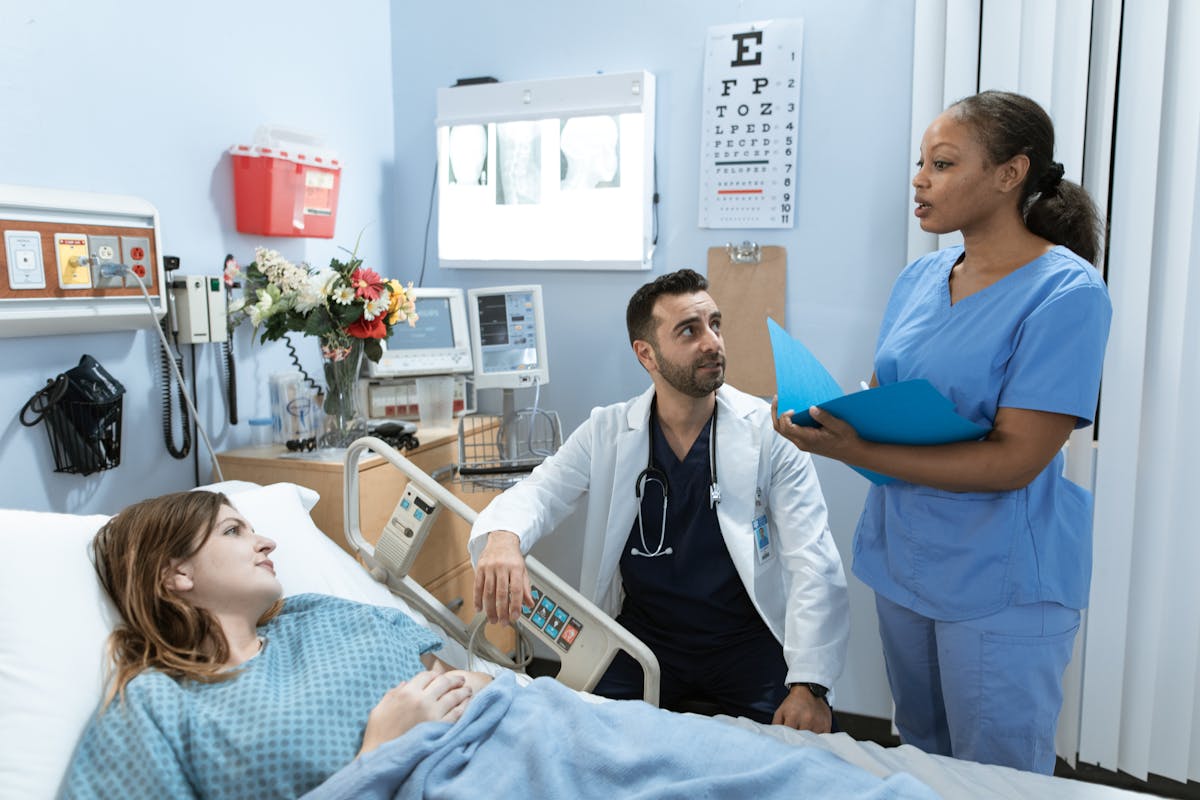
Healthcare and maternity care
Explaining each step before an exam, asking before touch, offering a chaperone, and supporting birthing people to make informed choices.

Education and childcare
Predictable routines, warning before changes, calm spaces, and responses to behavior that teach rather than shame.

Family and social services
Home visits that start with permission, forms that don't force people to retell their story, and plans built with families, not for them.

Coaching and wellness
Clear agreements, client-led goals, no pressure to share history, and a ready referral list for when concerns go beyond coaching.
It also shows up in places people don't expect: community centers, faith groups, libraries, gyms, shelters, courts, and workplaces. Anywhere people come for help, information, or a service, the same principles apply.
Research box · Established
One in six U.S. women reported mistreatment during maternity care
In a national survey of more than 2,100 women, about 1 in 6 reported at least one kind of mistreatment during pregnancy and birth care, such as being shouted at, scolded, ignored, or losing control over decisions. Rates were higher for women of color and for those giving birth in hospitals.
So what? Services can cause harm even when everyone means well. That's why trauma-informed practice focuses on how care is delivered, not only on clients' pasts.
Vedam, S., et al. (2019). The Giving Voice to Mothers study. Reproductive Health, 16, 77.
Video 4 of 5
Being Informed to Trauma
Jeff Wallace, TEDxDavenport (YouTube)
A speaker with lived experience and years in criminal justice and child welfare talks about the effects of trauma and how being informed lets anyone create change, wherever they work.
Watch for
- How behavior can make more sense when you understand context
- Why he believes anyone, in any role, can make a difference
- Then notice: being informed does not require knowing a person's story
09Your role: support, not treatment
Every profession has a : what your training, role, and the law allow you to do. Staying inside your scope isn't about doing less. It's about keeping people safe and making sure they get the right kind of help.
As a C-TICP holder, you can
- Make your words, routines, and spaces safer for everyone
- Explain what will happen and offer real choices
- Listen with care if someone chooses to share something painful
- Offer simple, optional calming and grounding tools
- Share information and resources, and make
- Advocate for a person's voice in their own care
- Help your team or organization improve its practices
The credential does not authorize you to
- Diagnose PTSD or any other condition
- Give or score clinical screening tools without the right authorization
- Ask people to go back over traumatic memories, or interpret what their experiences "mean"
- Provide counseling, psychotherapy, or trauma therapy
- Promise that your support will heal or cure trauma
- Call yourself a therapist, counselor, or clinician unless you hold that license
Why "don't ask for the story" is a safety rule, not just good manners
It can feel caring to invite someone to "get it all out." But retelling a traumatic experience without the right setting, timing, and training can stir up intense distress, and the helper may not be able to support what comes next. In clinical trauma therapy, going back over memories is done carefully, by choice, with a plan. In everyday services, it's usually not needed at all.
Research box · Unsupported
"Talking it through right away prevents trauma"
Single-session "debriefing," in which people describe a traumatic event in detail soon after it happens, was once common. A Cochrane review of the trials found it did not prevent PTSD, and one trial found people who were debriefed did worse over time.
So what? Never push anyone to retell what happened. Offer practical help, comfort, and connection, and let them choose if and when to talk, and to whom.
Rose, S., Bisson, J., Churchill, R., & Wessely, S. (2002). Psychological debriefing for preventing post traumatic stress disorder (PTSD). Cochrane Database of Systematic Reviews, CD000560.
Three answers to every situation: support, refer, or act now
When something comes up, sort it into one of three responses. You'll build a detailed decision guide in Module 4. For now, learn the shape of it.
Support
It's within your role. Respond with care, choices, and clear information.
A client is nervous about her first prenatal visit and wants to know what will happen.
Refer
It needs someone licensed or specialized. Offer a warm referral, with the person's agreement.
A client says nightmares and panic have been getting worse for months.
Act now
Someone may be in danger. Follow your safety protocol and get urgent help.
A client says she plans to end her life tonight, or is afraid to go home because of violence.

10Practice: two real-world moments
Now put it together. First, return to Lian's prenatal class and decide what Kendra should do. Then step into a community health center, where you'll meet Darnell Price at the front desk. Each choice you make shows what it builds, or breaks.
There's no penalty for wrong answers. Try different paths to see what happens.
What just happened in that scenario
The best path never required Lian to explain her past. She got options (the breathing exercise on her own), information (a handout in Mandarin), and an open door (a referral list, if she ever wants it). Kendra also took one small step toward changing the system: asking the coordinator to rethink a policy that punished people for things outside their control. That's trauma-informed practice working at two levels at once.
11Hope without pressure
People can and do recover from terrible experiences. Many describe finding new strengths, closer relationships, or a clearer sense of what matters. Holding hope for the people you serve is part of this work.
But hope should never become pressure. Phrases like "everything happens for a reason," "you're so strong," or "at least you learned something" can make people feel their pain isn't welcome. Recovery doesn't follow a set path or timeline, and nobody owes anyone a growth story.
Video 5 of 5
What Trauma Taught Me About Resilience
Charles Hunt, TEDxCharlotte (YouTube)
A speaker shares his own path through a painful childhood and what it taught him about resilience. It is one person's story, told by him, on his terms.
Watch for
- What he says helped him keep going
- The role of beliefs, people, and opportunities in his story
- Then reflect: why is it powerful when a person tells their own story, and harmful when others demand one?
Research box · Contested
"Post-traumatic growth" is real for some people, but hard to measure
Many people say they grew after a crisis. But when researchers tracked people before and after hard events, how much growth people reported often didn't match how much they had actually changed over time. Scientists still debate what self-reported growth measures.
So what? If someone tells you they've grown, believe them and celebrate it. Never suggest that they should grow, or that suffering is good for them.
Frazier, P., et al. (2009). Does self-reported posttraumatic growth reflect genuine positive change? Psychological Science, 20(7), 912–919.

Instead, try
"Thank you for telling me." "That sounds really hard." "You get to decide what happens next." "Would it help if I shared some options?" Simple, honest, and focused on the person's choices.
12Hands-on studio: your role card
A role card is a short, plain statement of what you offer, what you refer, and what you do if someone is in danger. It helps you explain your role to clients and colleagues, and it keeps you steady when a hard moment comes. Fill it in for your current or future work. Your answers save on this device. This studio doesn't count toward the badge.
13Wrap-up and your badge
Seven things to carry forward
- Trauma has three parts: the event, how it was experienced, and its effects. The same event can affect people very differently.
- Most adults have lived through something hard, and most people show resilience. Hard experiences don't make anyone broken.
- Not every behavior is about trauma. Stay curious and practical, and never label or diagnose.
- You don't need to know what happened. You need to know what helps.
- Trauma-informed care means universal precautions: safety, clear information, choice, and respect for everyone.
- Trauma-informed support is not trauma treatment. Support, refer, or act now.
- Hold hope without pressure. People tell their own stories, in their own time.
Reflection questions
- Which of your daily routines at work could feel unsafe or confusing to someone who has been hurt before?
- When have you assumed you knew why someone acted a certain way? What did you learn when you asked instead?
- Who would you call today if a client needed a licensed professional? If you don't know, that's your first task.
Different forms of trauma, why responses differ, everyday stress versus traumatic stress, and how services can accidentally re-traumatize.
Sources and credits
- Substance Abuse and Mental Health Services Administration. (2014). SAMHSA's Concept of Trauma and Guidance for a Trauma-Informed Approach (HHS Publication No. SMA 14-4884).
- Substance Abuse and Mental Health Services Administration. (2023). Practical Guide for Implementing a Trauma-Informed Approach (PEP23-06-05-005).
- American College of Obstetricians and Gynecologists. (2021). Caring for patients who have experienced trauma. Committee Opinion No. 825.
- Bonanno, G. A. (2004). Loss, trauma, and human resilience. American Psychologist, 59(1), 20–28.
- Frazier, P., et al. (2009). Does self-reported posttraumatic growth reflect genuine positive change? Psychological Science, 20(7), 912–919.
- Haslam, N. (2016). Concept creep. Psychological Inquiry, 27(1), 1–17.
- Jones, P. J., & McNally, R. J. (2022). Does broadening one's concept of trauma undermine resilience? Psychological Trauma, 14(S1), S131–S139.
- Kessler, R. C., et al. (2017). Trauma and PTSD in the WHO World Mental Health Surveys. European Journal of Psychotraumatology, 8(sup5).
- Purtle, J. (2020). Systematic review of evaluations of trauma-informed organizational interventions that include staff trainings. Trauma, Violence, & Abuse, 21(4), 725–740.
- Rose, S., et al. (2002). Psychological debriefing for preventing PTSD. Cochrane Database of Systematic Reviews, CD000560.
- Vedam, S., et al. (2019). The Giving Voice to Mothers study. Reproductive Health, 16, 77.
- Photos: Pexels (free license). Videos: embedded from their creators' YouTube channels; DNT Care is not affiliated with the speakers or producers.
- All client stories are fictional composites.
-
Add a short summary or a list of helpful resources here.